
Why Does My AC Freeze Up in 95° Florida Weather? (Yes, It Happens.)
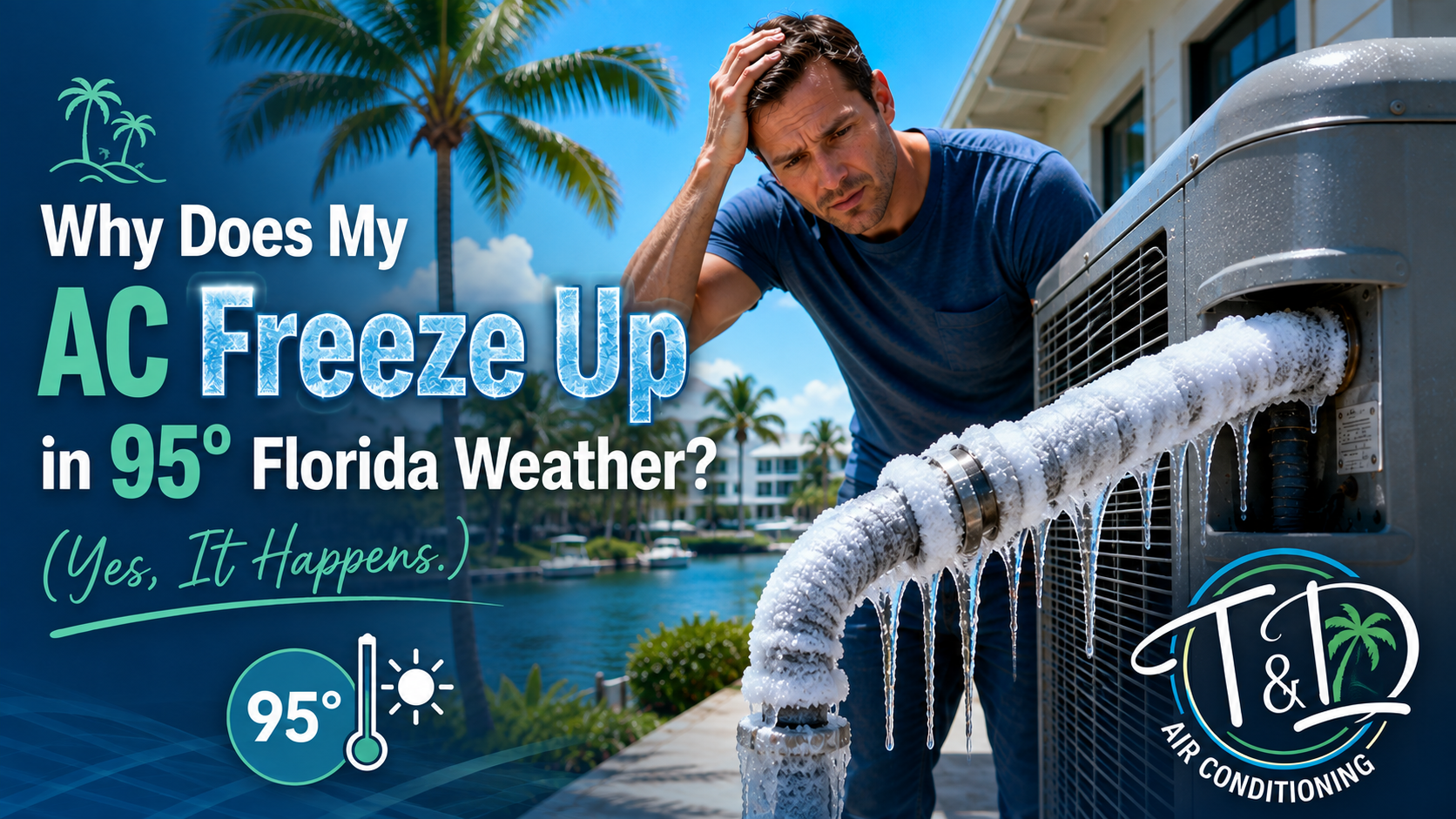
A frozen AC in the middle of a South Florida heatwave may seem impossible, but ice on your AC pipes is often a warning sign of restricted airflow, a frozen evaporator coil, or another issue that needs professional attention.
Seeing ice on your air conditioner during one of the hottest weeks of the year may seem impossible—but it's actually one of the most common signs your system needs attention.
Many South Florida homeowners are surprised to find ice on their AC pipes or discover that their system has stopped cooling altogether, even though it's over 95°F outside. It feels backward—shouldn't your air conditioner be working harder, not freezing?
The truth is, a frozen evaporator coil has very little to do with the outdoor temperature and everything to do with what's happening inside your HVAC system.
Let's break down why it happens and what you should do next.
How Can an Air Conditioner Freeze During Summer?
Your air conditioner works by absorbing heat from inside your home through the evaporator coil. Refrigerant inside that coil becomes extremely cold as it removes heat from the air.
Normally, warm household air continually passes over the coil, keeping it just above freezing.
When that airflow or refrigerant balance is disrupted, the coil becomes too cold. Moisture from the air freezes onto it, creating layers of ice that continue to grow until airflow is almost completely blocked.
Ironically, the hotter it is outside, the harder your AC works—and the faster a small issue can turn into a completely frozen system.
Common Reasons Your AC Is Frozen
1. Dirty Air Filter
A clogged air filter is one of the leading causes of a frozen AC.
When airflow is restricted, not enough warm air reaches the evaporator coil, allowing ice to form.
Check your filter if you notice:
Weak airflow from vents
Higher electric bills
Rooms cooling unevenly
Ice forming on the indoor unit
Replacing the filter regularly is one of the easiest ways to prevent this issue.
2. Blocked or Closed Air Vents
Many homeowners close vents in unused rooms to save money.
Unfortunately, this reduces airflow through the entire system and may contribute to a frozen evaporator coil.
Keep supply vents open and unobstructed by furniture, curtains, or rugs.
3. Low Refrigerant
Low refrigerant doesn't simply mean your AC has "run out."
It usually indicates there's a leak somewhere in the system.
When refrigerant pressure drops, the evaporator coil becomes colder than normal, making ice buildup much more likely.
Common signs include:
AC blowing warm air
Hissing sounds
Ice on refrigerant lines
Longer cooling cycles
4. Dirty Evaporator Coil
Even if your filter is clean, dust and debris can collect directly on the evaporator coil over time.
That layer of dirt acts like insulation, preventing proper heat transfer and increasing the chance of freezing.
Routine maintenance helps keep the coil clean and operating efficiently.
5. Running the AC Nonstop
South Florida summers push HVAC systems to their limits.
If your AC runs continuously because of extreme heat, poor insulation, dirty components, or neglected maintenance, small airflow problems can quickly become major freezing issues.
What Should You Do If Your AC Is Frozen?
If you notice AC ice on pipes or see frost inside your indoor unit:
✔ Turn the thermostat OFF.
Running the system while frozen can damage the compressor.
✔ Switch the fan to "ON."
This helps circulate warm air and speeds up the thawing process.
✔ Check your air filter.
If it's dirty, replace it.
✔ Do not chip away the ice.
Using tools can damage delicate evaporator fins or refrigerant lines.
✔ Schedule a professional inspection.
If the system freezes again after thawing, there's almost certainly an underlying problem that needs attention.
Can I Just Keep Running It?
Unfortunately, no.
Many homeowners think the AC is "still working" because cool air occasionally comes through the vents.
But continued operation with a frozen evaporator coil can lead to:
Compressor damage
Water leaks after the ice melts
Reduced cooling efficiency
Higher energy bills
Costlier repairs
Addressing the problem early is almost always less expensive than waiting for a complete breakdown.
How to Prevent a Frozen AC This Summer
Preventive maintenance is the best defense against unexpected cooling problems.
A few simple habits can make a big difference:
Replace air filters every 1–3 months
Keep all supply vents open
Schedule seasonal AC maintenance
Keep the area around your indoor and outdoor units clean
Address weak airflow before it becomes a bigger problem
Regular inspections can catch worn parts, refrigerant issues, and airflow restrictions before they leave you without cooling during South Florida's hottest days.
Stay Cool All Summer Long
Finding your AC frozen in summer may seem strange, but it's actually a warning sign that your system needs help.
Whether the issue is a clogged filter, restricted airflow, or a refrigerant leak, addressing it early can prevent expensive repairs and restore your home's comfort faster.
If you've noticed a frozen evaporator coil, ice on your AC pipes, or your home simply isn't cooling like it should, don't wait until the problem gets worse.
Our experienced technicians proudly provide South Florida AC repair, maintenance, and diagnostics to help keep your system running efficiently through even the hottest Florida summers.
If your air conditioner is freezing up, let our team identify the cause before it turns into a major repair. We'll get your system back to delivering the cool, reliable comfort your family depends on.
