
After Heavy Rain, Here’s Why Your AC Might Start Acting Up
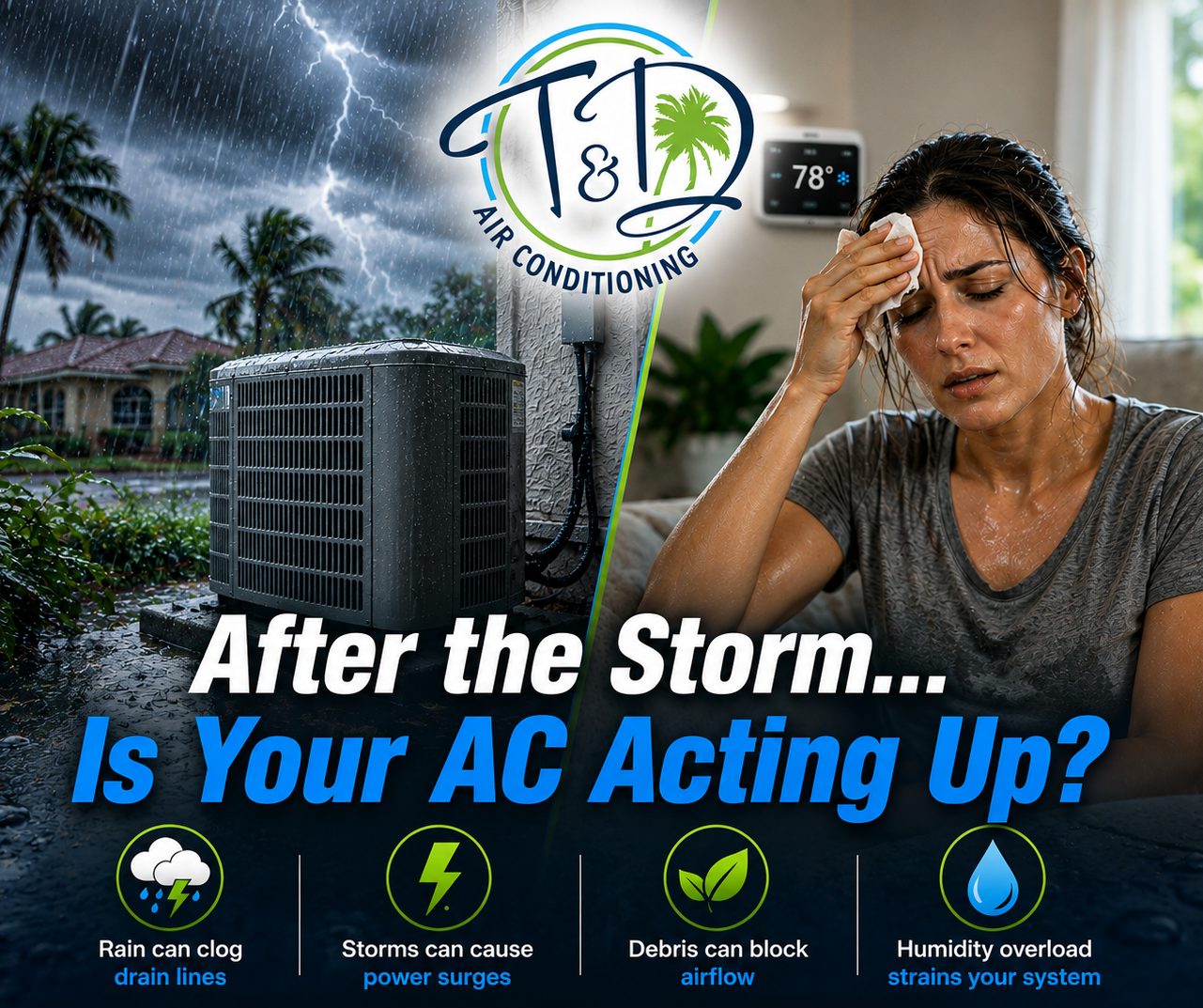
After the storm passes, hidden AC issues can begin. From clogged drain lines to excess humidity, your system may be working harder than it should—without you even realizing it.
South Florida storms don’t just flood streets—they can quietly impact your air conditioning system too.
If your AC starts acting strange after a heavy rainstorm, it’s not a coincidence.
Here’s what’s really going on—and what you should watch for.
🌧️ 1. Your AC Drain Line May Be Clogged
During humid, rainy weeks, your AC works overtime pulling moisture out of the air.
That moisture drains through a small pipe called the condensate line.
But in South Florida conditions, algae, dirt, and debris build up fast—especially after storms.
What happens:
Water backs up
Safety switches shut your system off
You may notice leaks or your AC suddenly stopping
⚡ 2. Power Surges Can Affect Your System
Thunderstorms often bring electrical fluctuations.
Even if your AC doesn’t completely shut down, power surges can:
Damage components
Cause delayed startup issues
Make your system behave inconsistently
🌬️ 3. Outdoor Unit Can Get Blocked or Flooded
Your outdoor unit is built for weather—but not for everything storms throw at it.
After heavy rain, it’s common to see:
Leaves and debris restricting airflow
Standing water around the unit
Reduced cooling efficiency
When airflow is blocked, your system has to work harder—leading to higher energy bills and wear.
🧊 4. Humidity Overload Can Throw Off Your System
Rainy weather = extreme humidity.
If your AC isn’t properly maintained, it may struggle to remove moisture from the air.
That leads to:
A sticky, uncomfortable home
Musty smells
Longer run times with less cooling
🚨 Signs Your AC Was Affected by Rain
Watch for these after a storm:
AC turning on and off randomly
Weak airflow
Strange smells
Water leaks near your unit
Higher-than-usual energy bills
✅ What You Can Do Right Now
After a heavy rain:
Check around your outdoor unit for debris
Make sure water isn’t pooling nearby
Replace your air filter if it’s dirty
Pay attention to any unusual behavior
❄️ Don’t Wait Until It Breaks
Small issues caused by storms can turn into expensive repairs fast—especially during peak summer heat.
If your system isn’t cooling like it used to, it’s better to catch it early.
A quick AC inspection can help prevent bigger problems and keep your home comfortable through the rest of the season.
📍 T & D Air Conditioning: Serving South Florida Homes
In Miami-Dade, Broward and Palm Beach Counties, heavy rain and humidity are part of daily life this time of year.
Your AC should be ready for it.
If you’ve noticed anything unusual after recent storms, now’s the time to get it checked.
