
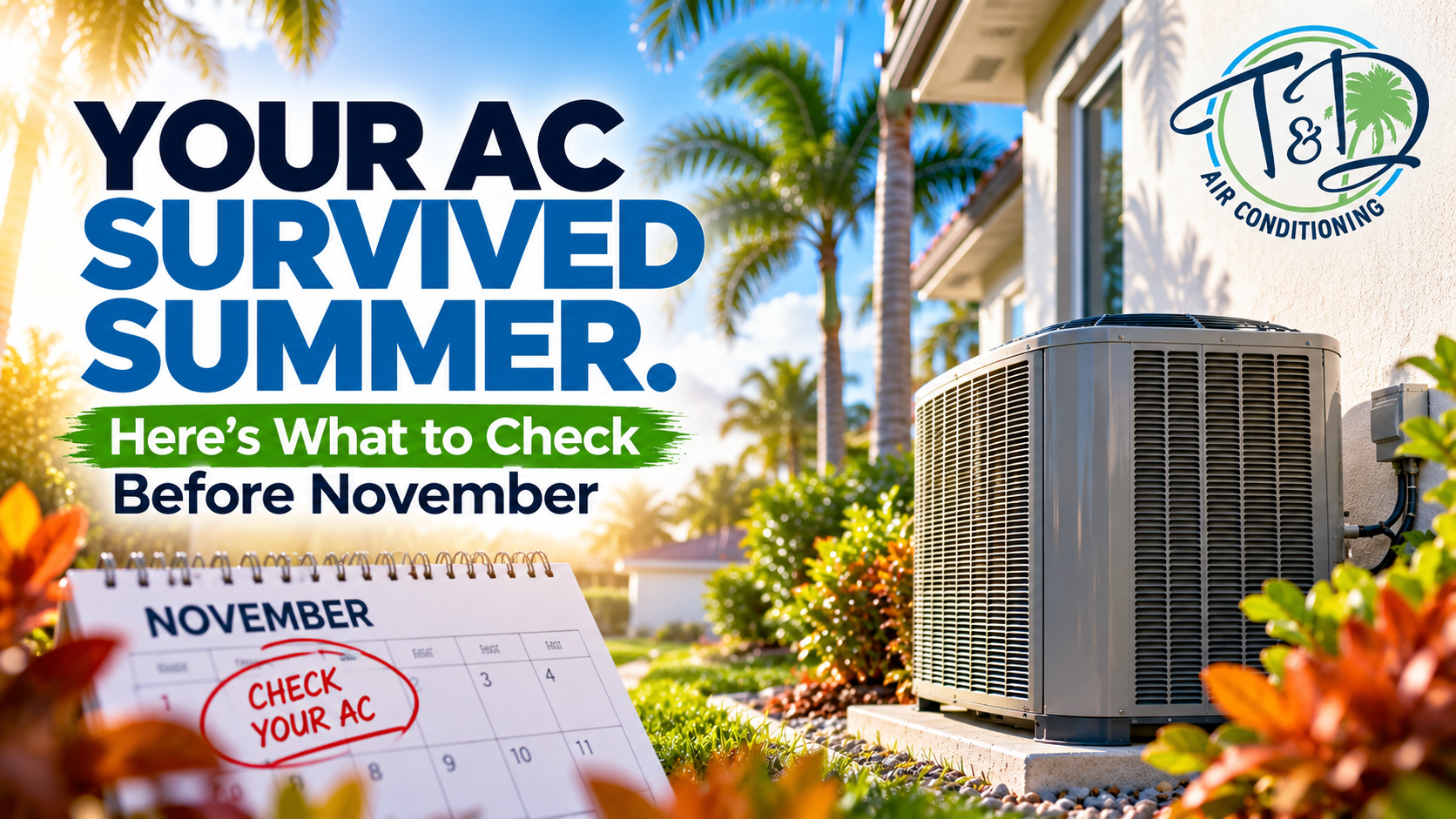
South Florida homeowners: schedule AC maintenance in Fort Lauderdale before November to help prevent unexpected breakdowns and keep your air conditioning system running efficiently after a long summer.
South Florida summers put air conditioning systems to the test. Between months of high temperatures, heavy humidity, and nearly constant cooling, your AC works hard to keep your home comfortable.
But just because your system is still running doesn't necessarily mean everything is working as it should.
As October comes to a close, it's a good time to check how your air conditioner has held up through the long cooling season. Small issues that go unnoticed today can turn into unexpected repairs, water leaks, or reduced cooling performance later.
At T & D Air Conditioning, we help homeowners throughout Fort Lauderdale, Broward County, Miami-Dade County, and Palm Beach County keep their systems running reliably. Here's what to check before November arrives.
1. Check Your Air Filter
Your air filter is one of the simplest yet most important parts of your AC system. It captures dust, dirt, and airborne particles before they can accumulate inside your equipment.
After months of continuous use, your filter may be holding more debris than usual.
A clogged filter can restrict airflow, making your system work harder to circulate air throughout your home. Depending on the system and the severity of the restriction, this can contribute to reduced cooling performance, higher energy use, and even a frozen evaporator coil.
What you can do:
Inspect your air filter for visible dust and buildup.
Replace disposable filters according to the manufacturer's recommendations.
Clean reusable filters as directed by the manufacturer.
Check your filter more frequently if you have pets, ongoing construction nearby, or excessive household dust.
Don't wait for weak airflow or warmer rooms to remind you that your filter needs attention.
2. Make Sure Your Evaporator Coil Can Do Its Job
Your evaporator coil helps remove heat from the air inside your home. As warm indoor air passes over the coil, heat is absorbed by the refrigerant, allowing the system to deliver cooler air.
Over time, dust and debris can accumulate on the coil, particularly when filtration or routine maintenance has been neglected. Buildup can interfere with heat transfer and airflow, reducing the system's ability to cool effectively.
In South Florida's humid climate, your evaporator coil also plays an important role in removing moisture from indoor air.
Watch for these warning signs:
Your AC runs longer than usual without adequately cooling the home.
Some rooms feel warmer than others.
Airflow seems weaker than normal.
You notice ice on refrigerant lines or accessible parts of the system.
A dirty coil isn't always visible without opening the equipment, and cleaning it improperly can cause damage.
If you suspect a problem, have a qualified HVAC technician inspect the system. If you notice ice buildup, turn off cooling and arrange service rather than continuing to run the AC.
3. Inspect Your Condensate Drain Line
If there's one AC component South Florida homeowners shouldn't overlook, it's the condensate drain line.
Because air conditioners remove moisture from indoor air, they produce condensation during normal operation. That water collects in a drain pan and flows through a condensate drain line.
In Florida's warm, humid environment, algae, slime, and other debris can contribute to drain-line clogs. After months of heavy AC use, buildup may restrict drainage and cause water to back up.
Depending on your system's design and safety controls, a clogged drain can lead to water leaks, overflow, property damage, or an automatic system shutdown.
Look for these warning signs:
Water around the indoor air handler.
A damp ceiling or wall near the AC equipment.
Musty odors around the unit.
An AC system that has unexpectedly stopped running.
Never ignore unexplained water near your air handler. Turn off the system if you notice an active leak and arrange an inspection.
Routine professional maintenance can help identify drainage problems before they become costly surprises.
4. Have Electrical Components Inspected
Your air conditioner relies on electrical components to start, operate, and regulate the system. Depending on its design, these include capacitors, contactors, wiring connections, motors, and control components.
Months of frequent operation mean these parts have been working hard. Age, heat exposure, normal wear, and electrical issues can affect their reliability.
A component that is beginning to fail may not cause an obvious problem at first. Sometimes, the first sign is intermittent operation or a system that struggles to start.
Pay attention to these symptoms:
Clicking, buzzing, or humming sounds that weren't present before.
The outdoor unit failing to start when cooling is called for.
Frequent system shutdowns or unexpected interruptions.
Burning smells or signs of electrical damage.
Electrical components should be inspected and tested by a qualified HVAC professional. Don't remove equipment panels or attempt electrical repairs yourself.
If you smell burning or suspect an electrical hazard, stop using the system and seek appropriate professional assistance.
5. Don't Forget Your Outdoor AC Unit
Your outdoor condenser has also been exposed to South Florida's summer conditions. Rain, wind, landscaping debris, grass clippings, and coastal salt air can all affect its condition.
Restricted airflow around the outdoor unit can interfere with heat rejection and reduce cooling performance.
Here's what homeowners can do:
Remove loose leaves and debris from the surrounding area.
Keep plants and shrubs from crowding the unit.
Check for obvious physical damage or heavy corrosion.
Make sure the unit has adequate clearance according to the manufacturer's recommendations.
Avoid bending the coil fins or spraying electrical components. If the outdoor coil needs a thorough cleaning or you notice significant corrosion, ask your HVAC technician to assess it.
Why Schedule AC Maintenance Before November?
In South Florida, cooler weather doesn't mean your air conditioner gets a long break. Warm afternoons, humid conditions, and changing temperatures can keep your system running throughout the year.
That makes late October a practical time to address wear from the summer cooling season.
A professional AC maintenance visit can help identify developing problems, check important system components, verify proper operation, and address maintenance needs before they become more disruptive.
Regular maintenance cannot guarantee that your AC will never break down, but it can help reduce avoidable problems and keep your system operating as intended.
It's also an opportunity to discuss any unusual noises, uneven cooling, drainage concerns, or changes in your energy bills with a qualified technician.
Stay Comfortable Through the Holidays With T & D Air Conditioning
The holiday season is approaching, and the last thing you want is an AC problem interrupting time with family and friends.
Whether you're in Fort Lauderdale, Broward County, Miami-Dade County, or Palm Beach County, T & D Air Conditioning is here to help you stay comfortable with professional HVAC service and preventive maintenance.
Don't wait for a small issue to become a major inconvenience.
Schedule your post-summer AC maintenance before the holiday season and give your system the attention it deserves.
Ready to get started?
Not Sure Which Maintenance Plan Is Right for You?
Every home has different cooling needs. Let T & D Air Conditioning help you find the right maintenance plan for your system.
Request a FREE Maintenance Plan Estimate!
Fill out our quick form, and we'll help you explore your options.
