
Why Are Your Walls Peeling? The Hidden HVAC Moisture Problem
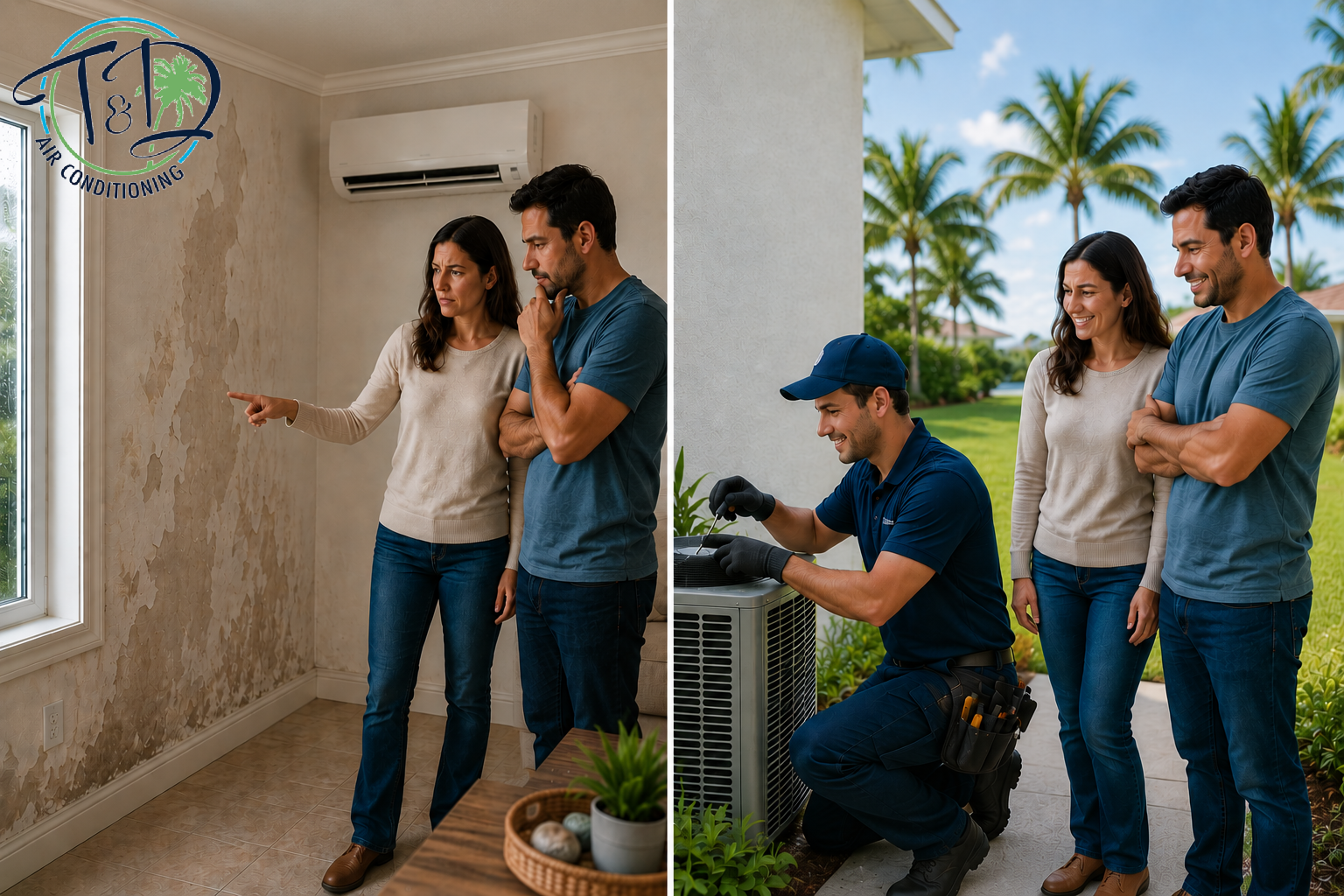
Many South Florida homeowners assume these are cosmetic issues—but they can actually be signs of excess indoor humidity caused by an HVAC system that's struggling to remove moisture properly.
You notice paint bubbling near a window. A section of wallpaper starts pulling away from the wall. Maybe there's a faint stain appearing on the ceiling that wasn't there a few months ago.
Most homeowners assume these are cosmetic issues caused by age or South Florida's humid climate. While humidity is often involved, many people don't realize their HVAC system could be contributing to the problem.
If your air conditioner isn't controlling moisture properly, your home may be experiencing hidden humidity issues that can damage walls, ceilings, paint, and even indoor air quality.
How Your HVAC System Controls Moisture
Your air conditioner does more than cool your home. It also removes moisture from the air.
As warm indoor air passes over the evaporator coil, moisture condenses and drains away through the condensate system. When everything is working correctly, your home stays comfortable and humidity levels remain under control.
However, when an HVAC system develops a problem, excess moisture can remain trapped inside the home. Over time, that moisture can begin affecting building materials and surfaces.
Signs Moisture May Be Building Up in Your Home
Watch for these common warning signs:
Peeling or bubbling paint
Wallpaper pulling away from walls
Water stains on ceilings or walls
Warped baseboards or trim
Condensation on windows
Musty odors indoors
Visible mold or mildew growth
These symptoms often develop gradually, making them easy to overlook until the damage becomes more noticeable.
HVAC Problems That Can Cause Excess Moisture
1. Poor Humidity Control
South Florida homes already battle high outdoor humidity for much of the year. If your air conditioner isn't removing enough moisture, indoor humidity can rise to unhealthy levels.
High humidity allows moisture to accumulate on walls, ceilings, and other surfaces, eventually causing paint failure and material deterioration.
2. Clogged Condensate Drain Lines
Your AC system continuously removes water from the air. That water must drain away properly.
When a condensate drain line becomes clogged, water can back up into the system and create moisture problems around the air handler, walls, ceilings, or nearby building materials.
3. Dirty Evaporator Coils
A dirty evaporator coil reduces your system's efficiency and can interfere with proper moisture removal.
If the coil can't effectively remove humidity from the air, indoor moisture levels may begin to rise, even if your home still feels cool.
4. Ductwork Issues
Leaky or poorly insulated ductwork can create condensation problems, especially in hot attics or humid spaces.
Over time, moisture from sweating ducts can affect nearby drywall, insulation, and structural materials.
Why South Florida Homes Are More Vulnerable
Homes throughout Broward, Miami-Dade, and Palm Beach counties face unique humidity challenges.
High outdoor moisture levels mean your air conditioning system works year-round to maintain comfort. Even a minor HVAC issue can quickly lead to excess indoor humidity, creating conditions that encourage mold growth and moisture damage.
What starts as peeling paint may actually be an early warning sign of a larger indoor comfort problem.
What Homeowners Can Do
If you're seeing signs of moisture damage:
Replace dirty air filters regularly.
Check for visible water around your indoor unit.
Monitor indoor humidity levels.
Investigate any musty odors.
Schedule an HVAC inspection if problems persist.
Addressing humidity issues early can help prevent more extensive repairs later.
Don't Ignore the Warning Signs
Peeling paint, bubbling drywall, and moisture stains aren't always just cosmetic concerns. They can be indicators that your HVAC system is struggling to manage humidity effectively.
The sooner the underlying cause is identified, the easier it is to protect your home's comfort, air quality, and structure.
If you've noticed signs of excess moisture in your South Florida home, T&D Air Conditioning can help identify whether your HVAC system is contributing to the problem and recommend the right solution.
Protect your home from hidden moisture damage before it becomes a larger and more expensive issue.
