
Heat, Humidity, and High Tides: Why Florida Homes Need Extra AC Maintenance
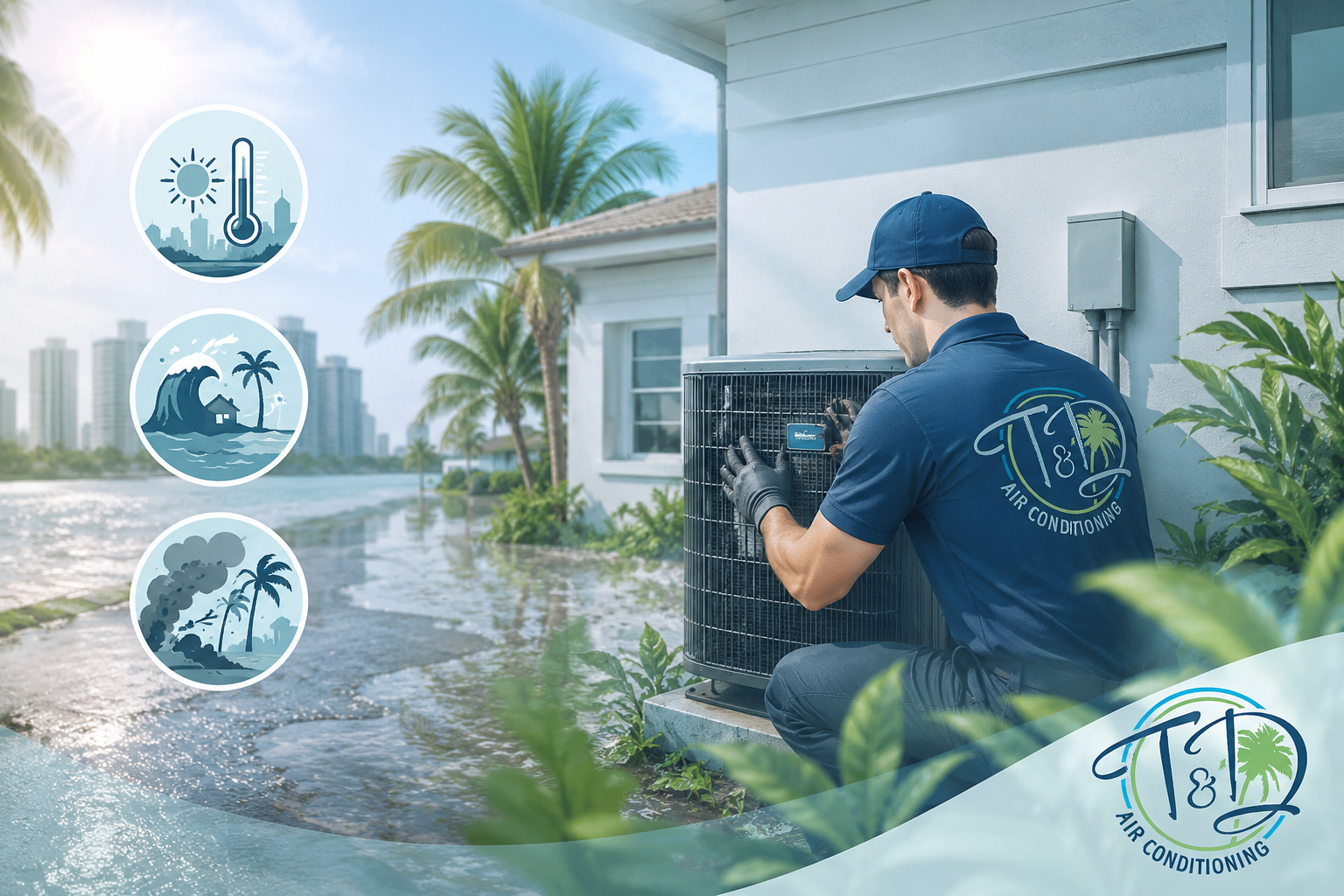
South Florida’s heat, humidity, salt air, and king tides can quietly wear down your air conditioning system. Regular HVAC maintenance helps protect your home's comfort, efficiency, and indoor air quality year-round.
South Florida homeowners know the struggle: our summers are hot and sticky, and even on sunny days we sometimes see saltwater pooling on the streets. What many people don’t realize is how these local weather extremes quietly stress your air conditioning system. From scorching heat waves to “king tide” floods and wildfire smoke, our climate is taking a toll on AC units. The good news is, with some smart maintenance you can avoid breakdowns and extend the life of your equipment.
Extreme Heat and Humidity
Every summer, Miami-Dade, Broward, and Palm Beach see record temperatures and humidity. In July 2023, Miami’s “feels-like” heat index hit about 105°F. Your air conditioner will be running almost constantly. This extreme load can cause refrigerant to overheat, compressors to work overtime, and even coils to ice up when the compressor strain is relieved. The result? Premature compressor failures and high electric bills. Regular tune-ups are vital here: a technician will clean the coils and check refrigerant levels so your system doesn’t strain itself into a breakdown. They can spot tiny issues—like a worn capacitor or a small leak—before they become a $2,000 emergency.
Coastal Salt Air
Living near the ocean has its perks... and downsides. Sea breezes carry salt particles that settle on your AC’s metal parts. Over time, these particles attract moisture and form a salty film that eats away at aluminum fins, copper tubing, and fan blades. If you’ve ever seen your car rust faster at the beach, imagine what salt air does to an unprotected AC coil. In fact, local codes now require special corrosion-resistant coatings on coastal HVAC systems. For homeowners, the remedy is straightforward: ask your technician to rinse your outdoor unit with fresh water monthly and consider applying a non-toxic anti-corrosion spray. Covering the unit during the off-season and raising it on blocks can also keep salt spray from accumulating.
King Tides and Flooding
Twice a year, South Florida faces “king tides”—extreme high tides that flood low-lying areas with salty bay water. Local news shows houses and streets awash in saltwater. Surprisingly, even without rain, saltwater can seep up through storm drains and saturate yards. If your AC’s outdoor condenser is at ground level, that means it could be submerged or splashed with corrosive water. After such events, it’s important to inspect your system: rinse the unit off, clean the drain pan, and dry any wet components. For the long term, elevating your unit or installing flood barriers can prevent saltwater exposure.
Smoke and Air Quality
You might not associate South Florida with wildfire smoke, but in fall 2023 smoke from Canadian fires pushed our air quality into the “unhealthy” range. The Florida Dept. of Health advised residents to stay indoors and run their AC with the fresh-air intake closed and filters clean. Clogged filters can’t stop smoke particles, which are tiny and trigger asthma. If you live near the coast, you also need to guard against red-tide toxins. Upgrading to a high-efficiency air filter (MERV 11–13) and replacing it monthly during such events will keep most airborne irritants out of your home.
Power Surges and Electronics
Florida storms and heat waves can strain the grid, causing voltage spikes or outages. Your AC’s electronics are sensitive: a single lightning strike or surge can instantly melt the control board or fry the compressor. Yet, a professional-installed surge protector is relatively cheap (hundreds, not thousands) and can save your entire system. Ask your HVAC tech to install one on both the outdoor unit and indoor air handler. This small step ensures that your cooling system isn’t at the mercy of the next summer thunderstorm.
Maintenance Plan Checklist
Given all these threats, a solid maintenance plan is essential. When your HVAC contractor visits, make sure they do the following for peace of mind:
Inspect and clean coils: Salt, dirt, and mold can coat your coils. A pro will rinse off the condenser coil and clean the evaporator coil twice a year. This keeps heat exchange efficient.
Lubricate and check parts: Motors, fans, and bearings should be lubricated and inspected for wear. Loose electrical connections will be tightened to prevent shorts.
Test refrigerant level: Low refrigerant or oil means the compressor will overheat. The tech will adjust the charge if needed.
Clean condensate drains: A clogged drain line or pan can flood your indoor unit. Drains are flushed clear of algae and debris.
Replace filters: Change your return air filters every 1–2 months (monthly is best), especially during pollen, algae, or smoke seasons.
Check thermostat and controls: Accurate cooling depends on a calibrated thermostat. Electrical controls are checked for corrosion from salt or moisture.
Inspect ductwork: Any leaks or moldy insulation in ducts should be sealed or replaced to maintain airflow and air quality.
Discuss biocide treatments for the evaporator coil and drain pan to kill mold and bacteria. Some companies offer UV lights to continuously prevent microbial growth. After a hurricane or major flood, definitely have your system evaluated; sometimes a unit must be shut off or even replaced to avoid safety hazards.
Why It Pays Off
All this sounds like a lot, but think of it as insurance. According to Florida HVAC experts, regular tune-ups cut emergency repairs by about 80%. The cost of two annual visits (often $200–300 total) is far less than a single compressor replacement ($1,500+). Customers who neglected maintenance often find themselves replacing the whole system a decade early. In our climate, even “minor” issues from salt or moisture can cascade into major failures.
Take Action Now
Don’t wait for a breakdown on the hottest day of July. Schedule your seasonal A/C inspection today. Ask about our HVAC Maintenance Plan, which includes salt-safe cleaning, high-grade filters, surge protection, and priority scheduling. We’ll check every detail so that when the heat, humidity or salt hits, your home stays cool and worry-free.
Keep your cool – and your warranty valid – with regular HVAC care. Your AC handles enough; give it the maintenance it deserves, and it will keep you comfortable through many more Florida summers.
